- Need any help? Call : Call or chat with us: +91 8887594424
- Support : inquiry@inventorigin.com

Recent Post


Ultimate Guide Cloud Modern
15 October 2024
IT Consulting Can Boost
15 October 2024
AI Solutions
Put AI to work in your business
Putting AI to work in your business is no longer a futuristic idea—it’s a practical way to drive efficiency, innovation, and growth. AI can automate repetitive tasks, analyze large volumes of data, and uncover insights that help you make faster, smarter decisions. From customer support chatbots to predictive analytics and personalized recommendations, AI enables businesses to deliver better experiences while reducing operational costs.
By integrating AI into core processes, organizations can streamline workflows, improve accuracy, and free up teams to focus on strategic work. For example, AI-powered tools can optimize supply chains, detect fraud, enhance marketing campaigns, and improve sales forecasting. The key is to start with clear use cases that align with business goals and gradually scale AI adoption.
Successful AI implementation also requires the right data strategy, governance, and continuous learning. Businesses that embrace AI not just as a tool but as a capability gain a competitive advantage—adapting quickly to market changes and unlocking new opportunities. In a rapidly evolving digital landscape, AI is not just an option; it’s a catalyst for sustainable business growth.
AI process automation
AI process automation uses machine learning and intelligent workflows to streamline repetitive tasks, reduce human effort, improve accuracy, and accelerate business operations across various domains.
AI-powered chatbots
AI-powered chatbots use machine learning and natural language processing to deliver instant, personalized responses, automate support, enhance user experience, and scale customer interactions efficiently.
Predictive analytics
Predictive analytics uses historical data, statistical models, and machine learning to forecast future outcomes, enabling proactive decision-making, risk reduction, and improved business performance across various domains.
Intelligent dashboards
Real-time BI dashboards with AI-generated summaries and natural language querying — so anyone can explore data without needing a data scientist.
Document intelligence
Extract, classify, and summarize information from contracts, invoices, reports, and emails automatically using large language models.
AI governance & strategy
AI governance and strategy ensure responsible AI adoption by defining policies, managing risks, ensuring compliance, aligning with business goals, and maintaining transparency, security, and ethical use.
AI use cases by industry to boosting proactively
AI is transforming finance and accounting by automating repetitive tasks and enhancing decision-making. It enables faster data processing, accurate financial forecasting, and real-time fraud detection using advanced algorithms and machine learning. AI-powered tools streamline processes like invoice handling, auditing, and reconciliation, reducing human error and operational costs. In accounting, it improves compliance by identifying anomalies and ensuring adherence to regulations. In finance, predictive analytics helps organizations make data-driven investment and risk management decisions. Overall, AI increases efficiency, accuracy, and scalability, allowing professionals to focus more on strategic planning rather than routine tasks.

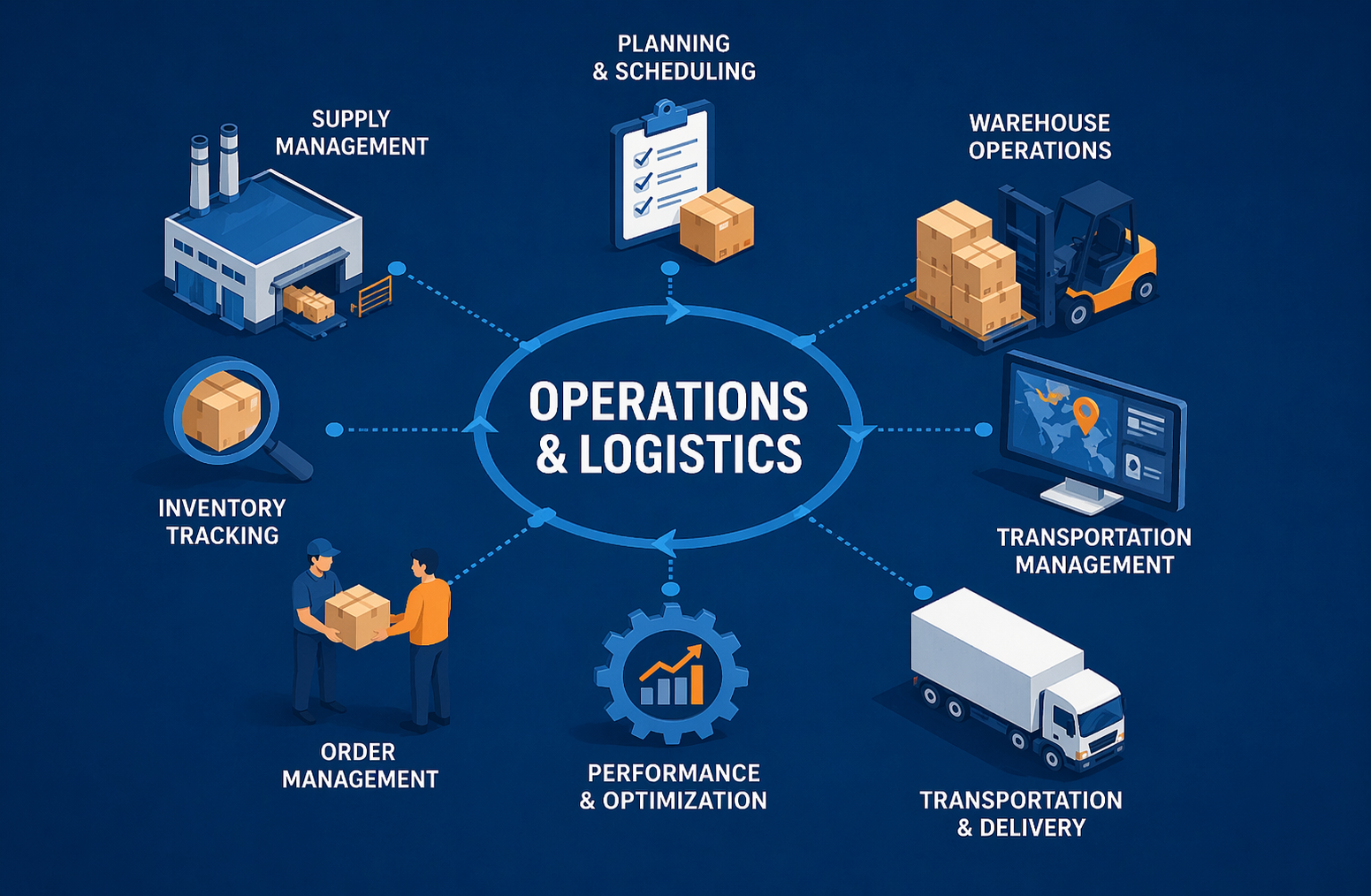
AI is transforming operations and logistics by enabling smarter, faster, and more efficient decision-making. It helps in demand forecasting, route optimization, and inventory management by analyzing large datasets in real time. Machine learning models predict delays, reduce fuel consumption, and improve delivery accuracy. AI-powered automation streamlines warehouse operations through robotics and intelligent sorting systems. It also enhances supply chain visibility, allowing businesses to respond quickly to disruptions. By minimizing human errors and optimizing resource utilization, AI significantly reduces operational costs while improving speed, reliability, and customer satisfaction across the entire logistics ecosystem.
AI is transforming HR and recruitment by making hiring faster, smarter, and more data-driven. It helps automate resume screening, shortlist candidates based on skills and experience, and reduce human bias through standardized evaluation. AI-powered chatbots assist in candidate engagement, answering queries and scheduling interviews. Predictive analytics enables HR teams to identify the best-fit candidates and forecast hiring needs. Additionally, AI tools enhance employee onboarding, performance tracking, and retention strategies. By reducing manual effort and improving decision-making, AI allows HR professionals to focus more on strategic tasks and building meaningful employee experiences.

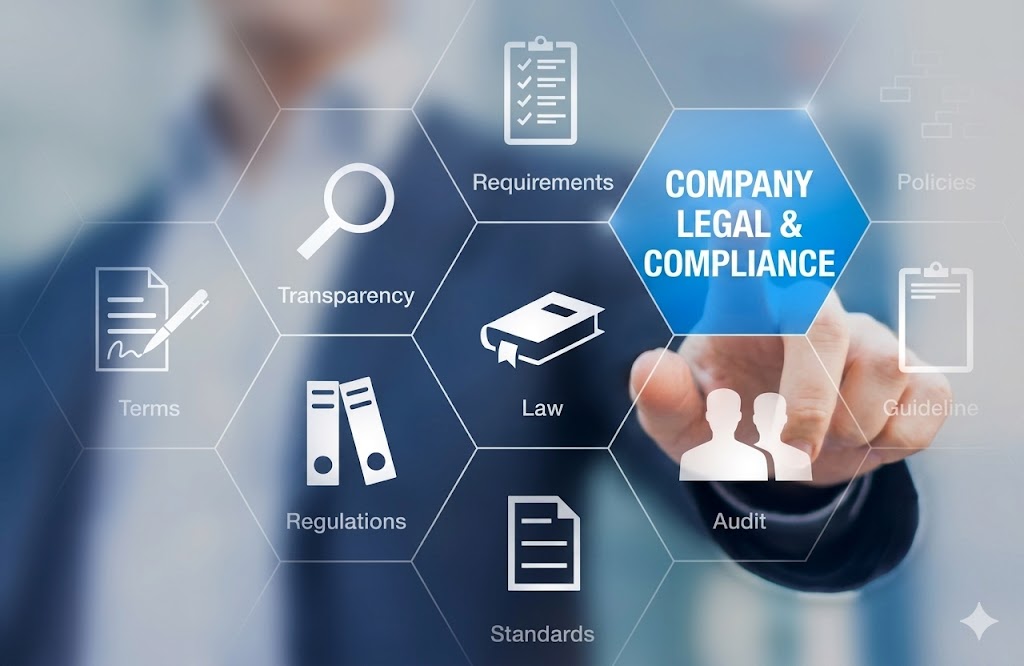
AI is transforming legal and compliance functions by automating time-consuming tasks and improving accuracy. It can quickly analyze large volumes of contracts, identify risks, and flag non-compliant clauses using natural language processing. AI-driven tools also support regulatory monitoring by tracking changes in laws and ensuring policies stay updated. In compliance, it helps detect anomalies, prevent fraud, and maintain audit trails through predictive analytics. Additionally, AI chatbots assist in answering legal queries and guiding employees on policies. By reducing manual effort and minimizing errors, AI enables organizations to enhance efficiency, reduce risks, and maintain stronger regulatory compliance.
AI is transforming customer service by enabling faster, smarter, and more personalized support. Chatbots and virtual assistants handle routine queries 24/7, reducing wait times and operational costs. AI-powered systems analyze customer behavior, past interactions, and sentiment to provide tailored responses and proactive solutions. Technologies like natural language processing (NLP) help understand and respond to human language more effectively. AI also assists support agents by suggesting responses, automating workflows, and prioritizing tickets. This improves efficiency and customer satisfaction while allowing human agents to focus on complex issues, ultimately creating a seamless and scalable customer service experience.

AI is transforming sales and marketing by enabling data-driven decision-making and personalized customer experiences. It helps analyze customer behavior, predict buying patterns, and segment audiences more accurately. Tools powered by AI can automate lead scoring, email campaigns, and chat-based customer support, improving efficiency and response time. In marketing, AI enhances content recommendations, ad targeting, and campaign optimization, ensuring higher ROI. Sales teams benefit from predictive insights, enabling them to focus on high-value prospects. Overall, AI reduces manual effort, improves customer engagement, and drives smarter, faster business growth.